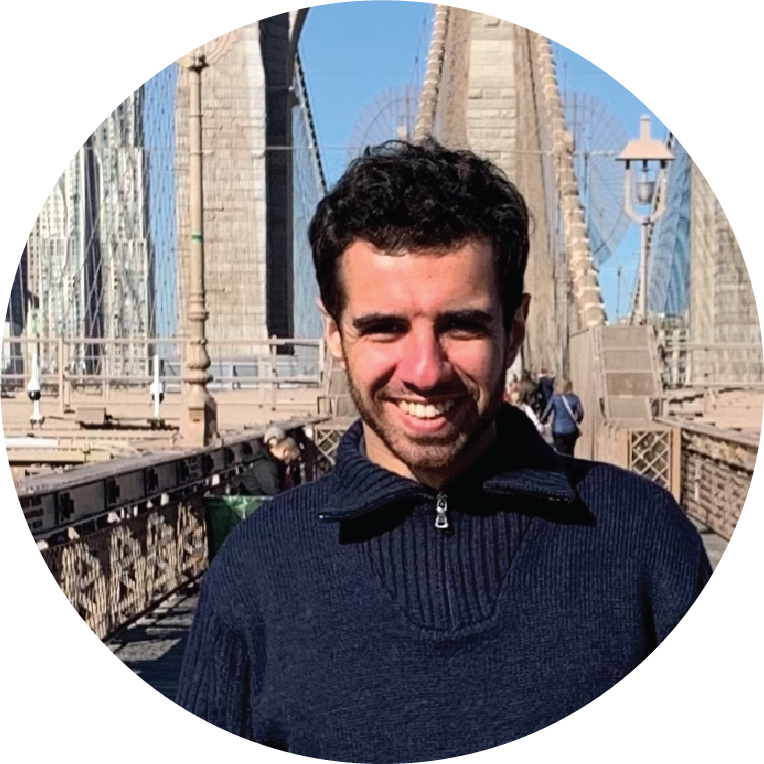
Alessandro E. Pasqui
AI Research Scientist with a background in statistical physics, developing interpretable computational methods for biology.
Interested in foundation models, mechanistic interpretability, and differentiable optimisation
to uncover biologically meaningful representations from complex biological data.
Postdoc @ MICS Lab, CentraleSupélec
alessandro [dot] evanson-pasqui [at] centralesupelec [dot] fr
ap [dot] pasqui [at] gmail [dot] com
📍 Paris-based (remote or on-site)



TL;DR
I am currently a Postdoc researcher at the MICS lab at CentraleSupélec, where I work on interpretability methods for foundation models trained on biological data.
I recently completed my PhD at the Collège de France as a Marie Skłodowska-Curie Fellow, under the supervision of Dr. Hervé Turlier and in collaboration with Dr. Maxence Ernoult from Google DeepMind.
My doctoral research focused on AI-based methods for inverse problems in biological cell systems, developing computational frameworks that bridge physics-based modeling, machine learning, and cell biology.
Key projects include:
- VertAX — a differentiable vertex model implemented in JAX for efficient forward and inverse modeling of confluent tissues, leveraging automatic differentiation and bilevel optimization to infer cellular parameters and reproduce tissue-scale behavior. (Manuscript in preparation for Nature Computational Science)
- ZAugNet — a self-supervised generative model for 3D bio-imaging (built in PyTorch) that uses adversarial learning and knowledge distillation to enhance axial resolution in microscopy data. (Manuscript under revision at Nature Communications)
Before my PhD, I completed a Master’s Degree in Statistical Physics at Sapienza University of Rome and the Italian Institute of Technology, where I developed high-performance algorithms for shape matching and protein–receptor interaction studies. My Bachelor’s thesis, also at Sapienza, explored percolation in models with long-range interactions using analytical and numerical methods.
Social Links
- Scholar: https://scholar.google.com/citations?user=YOUR_USER_ID
- GitHub: https://github.com/apasqui
- LinkedIn: https://www.linkedin.com/in/appasqui